
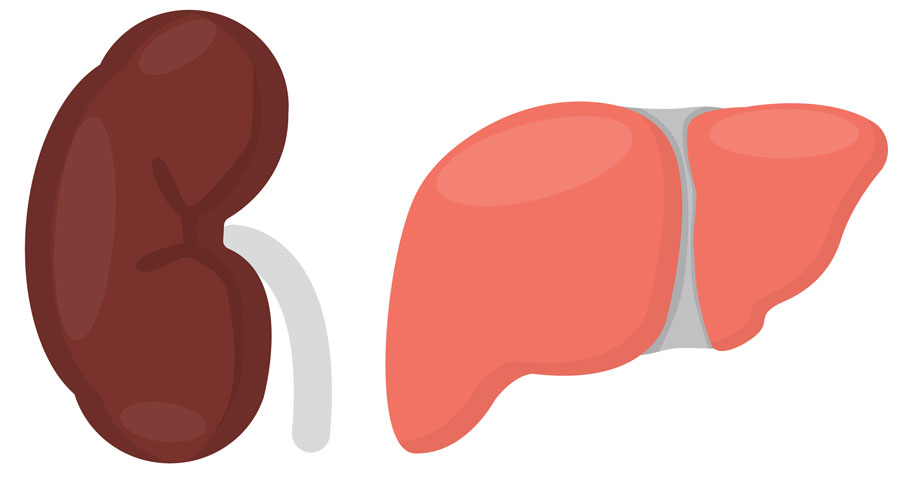
The kidneys and liver are essential organs that play crucial roles in maintaining overall health and well-being. The kidneys filter waste, regulate fluid balance, and support other vital functions, while the liver plays a central role in metabolism, detoxification, and nutrient storage.
Both organs can be affected by various diseases that can disrupt their normal functions, leading to serious health complications. In this article, we will explore the key functions of the kidneys and liver, common diseases that can impact them, and ways to maintain their health.
Kidney Function Explained
The kidneys carry out several important roles, and understanding their location is the first step in learning how they work.
Kidney Location
The body contains two kidneys, each roughly the size of an adult’s fist, located on either side of the spine beneath the rib cage.1
What the Kidneys Do
The kidneys:
- Filter blood, removing waste and acid to help maintain a healthy balance of water, salt, and minerals in the blood.
- Produce hormones that regulate blood pressure, stimulate red blood cell production, and support bone health.2
How the Kidneys Filter Blood
- Blood flows to the kidneys through an artery, where it is filtered.
- Waste then travels through the ureter to be stored as urine in the bladder.
- Once the blood is filtered, it returns to the bloodstream.
- When the bladder is full, urine exits the body through the urethra.1
Volume of Blood Filtered
The kidneys filter about half a cup of blood per minute, removing waste and excess water to produce urine. This urine then flows from the kidneys to the bladder via the ureters.2
The kidneys perform their vital function by filtering and returning approximately 200 quarts of fluid to the bloodstream every 24 hours. Of this, about two quarts are excreted as urine, while the rest is retained in the body.1
Common Kidney Diseases
Several conditions can interfere with normal kidney function, with chronic kidney disease being one of the most serious.
Chronic Kidney Disease (CKD)
Chronic kidney disease occurs when the kidneys are damaged and cannot filter blood effectively.
- Risk factors: type 2 diabetes, high blood pressure, heart disease, and a family history of kidney failure.
- Prevention: eat a healthy diet, stay physically active, and maintain a healthy weight.
- Severe cases: CKD may lead to kidney failure, which might require dialysis or a kidney transplant.³
Kidney Stones
Kidney stones are solid, pebble-like deposits that form when certain minerals build up in the urine.
- Symptoms: sharp pain in the back, side, or abdomen, and blood in the urine.
- Treatment: can be removed by a healthcare professional; if caught early, they are less likely to cause long-term problems.
- Prevention: drink plenty of water, eat a balanced diet, and if necessary, take prescribed medications that help reduce the risk of stones.⁴
Liver Functions Explained
The liver plays a crucial role in metabolism, immune function, digestion, and detoxification.5
What the Liver Does
The liver plays a crucial role in:
- Metabolism – breaking down fats for energy and processing nutrients.
- Immune function – filtering blood and helping fight infections.
- Digestion – producing bile to aid in breaking down food.
- Detoxification – removing harmful substances from the body.⁵
How the Liver Processes Blood
The liver is made up of small units called lobules, which consist of liver cells. Blood and bile flow through channels within these cells.
- Blood from the digestive organs enters the liver through the portal vein, carrying nutrients, medications, and toxins.
- Inside the liver, these substances are processed, stored, detoxified, and then either:
- released back into the bloodstream, or
- passed into the bowel for elimination.⁶
Metabolic and Storage Functions
The liver also plays a key role in various metabolic processes. The liver:
- Stores vitamins and minerals for future use
- Breaks down fats for energy
- Helps regulate blood sugar
- After a meal, when blood sugar levels rise, the liver removes excess sugar from the blood and stores it as glycogen.
- If blood sugar drops, the liver breaks down glycogen and releases sugar back into the bloodstream.⁶
Common Liver Diseases
Like the kidneys, the liver is vulnerable to different conditions that can disrupt its ability to function, including cirrhosis.
Cirrhosis
Cirrhosis, or hepatic fibrosis, is scarring of the liver caused by long-term damage or disease.
A liver with scar tissue cannot function properly.
- Symptoms: easy bruising, bleeding, swelling of the abdomen or legs, high blood pressure, and enlarged veins.⁷
- Causes: most commonly chronic alcoholism and hepatitis.
- Treatment: addressing the underlying cause can help prevent further damage and the growth of additional scar tissue; severe cases may require a liver transplant.⁷
Fatty Liver Disease
Fatty liver disease occurs when excessive fat accumulates in the liver.
The two main types are alcoholic fatty liver disease and nonalcoholic fatty liver disease.8
- Alcoholic fatty liver disease – caused by heavy alcohol use; When the liver breaks down alcohol, it can create harmful substances that damage liver cells, cause inflammation, and impair liver function.8
- Nonalcoholic fatty liver disease (NAFLD) – has no clear cause, but it is more common in people with type 2 diabetes, obesity, high blood pressure, and metabolic syndrome.⁸
Symptoms:
- Both nonalcoholic fatty liver and alcoholic fatty liver diseases are usually silent diseases with few or no symptoms.
- If you do have symptoms, you may feel tired or have discomfort in the upper right side of your abdomen.8
Diagnostic Tests for Kidney & Liver Health
Blood tests such as a comprehensive metabolic panel are ordered by healthcare providers to assess kidney and liver functions. This test measures the following: the amounts of protein in the blood, produced by the liver; levels of bilirubin, a waste formed when the body breaks down old red blood cells, which the liver removes; and levels of blood urea nitrogen and creatinine, waste products filtered out through the blood by the kidneys. This preventive blood test offers insight into kidney and liver function and can help detect early-stage complications.9
How to Keep Kidneys Healthy
- Stay hydrated: Drinking water helps kidneys flush out waste and prevent stones.
- Eat a balanced diet: Focus on fruits, vegetables, whole grains, and lean protein while limiting salt and processed foods.
- Maintain a healthy weight: Obesity raises the risk of diabetes and high blood pressure, both of which damage kidneys.
- Manage blood pressure and blood sugar: Keep these under control to protect kidney function.
- Avoid smoking and excess alcohol: Both reduce blood flow to the kidneys and increase disease risk.
- Limit overuse of painkillers: Regular heavy use of NSAIDs (like ibuprofen) can harm kidneys.
- Get regular checkups: Simple blood and urine tests can catch kidney problems early.
How to Keep the Liver Healthy
- Limit alcohol: Heavy drinking is one of the leading causes of liver disease.
- Eat for liver health: Choose high-fiber foods, fruits, vegetables, lean proteins, and healthy fats. Cut back on sugar, fried foods, and processed snacks.
- Stay active: Regular exercise lowers the risk of obesity and fatty liver disease.
- Maintain a healthy weight: Losing even 5–10% of body weight can improve liver health if you have fatty liver.
- Be careful with medications and supplements: Overuse of acetaminophen (Tylenol), herbal supplements, and some prescriptions can strain the liver.
- Get vaccinated: Vaccines are available for hepatitis A and B, both of which can damage the liver.
- Avoid toxins: Use gloves, masks, or ventilation when handling chemicals like cleaning products or paint.
- Routine checkups: Blood tests can spot liver problems before symptoms appear.
Quick Facts
- Kidneys filter about 200 quarts of fluid daily, of which ~2 quarts leave as urine.¹
- The liver regulates blood sugar, stores vitamins and minerals, and detoxifies blood.⁵ ⁶
- Chronic Kidney Disease (CKD) affects ~37 million U.S. adults.¹⁰
- Fatty liver disease affects ~25% of the world’s population.¹¹
The Bottom Line
If you have concerns about your kidney or liver health, speak with your primary care provider about ways to preserve your kidney and liver functions, and what you can do to prevent and decrease the risk of developing future complications associated with kidney and liver diseases.
Sources
- National Kidney Foundation. How your kidneys work. 2015. Accessed 22 Nov 2024. https://www.kidney.org/kidney-topics/how-your-kidneys-work
- National Institute of Diabetes and Digestive and Kidney Diseases. Your Kidneys & How They Work. Reviewed Jun 2018. Accessed 11 Nov 2024. https://www.niddk.nih.gov/health-information/kidney-disease/kidneys-how-they-work
- National Institute of Diabetes and Digestive and Kidney Diseases. Chronic Kidney Disease (CKD). Reviewed Oct 2016. Accessed 2 Dec 2024. https://www.niddk.nih.gov/health-information/kidney-disease/chronic-kidney-disease-ckd
- National Institute of Diabetes and Digestive and Kidney Diseases. (Kidney stones) Reviewed May 2017. Accessed 2 Dec 2024. https://www.niddk.nih.gov/health-information/urologic-diseases/kidney-stones
- Kalra A, Yetiskul E, Wehrle CJ, et al. Physiology, Liver. [Updated 2023 May 1]. In: StatPearls. Treasure Island (FL): StatPearls Publishing; 2024 Jan-. Available from: https://www.ncbi.nlm.nih.gov/books/NBK535438/
- InformedHealth.org. Cologne, Germany: Institute for Quality and Efficiency in Health Care (IQWiG); 2006-. In brief: How does the liver work? [Updated 2023 Feb 28]. Available from: https://www.ncbi.nlm.nih.gov/books/NBK279393/
- Medline Plus. (Cirrhosis). Updated 1 Nov 2016. Accessed 2 Dec 2024. https://medlineplus.gov/cirrhosis.html
- Medline Plus. Fatty Liver Disease. Updated 26 Apr 2017. Accessed 2 Dec 2024. https://medlineplus.gov/fattyliverdisease.html
- Medline Plus. Comprehensive Metabolic Panel (CMP). Updated 4 Dec 2023. Accessed 11 Nov 2024. https://medlineplus.gov/lab-tests/comprehensive-metabolic-panel-cmp/
- Centers for Disease Control and Prevention. Chronic Kidney Disease in the United States, 2023. Accessed 2 Dec 2024. https://www.cdc.gov/kidneydisease/basics.html
- American Liver Foundation. Fatty Liver Disease. Accessed 2 Dec 2024. https://liverfoundation.org/liver-diseases/fatty-liver-disease/