
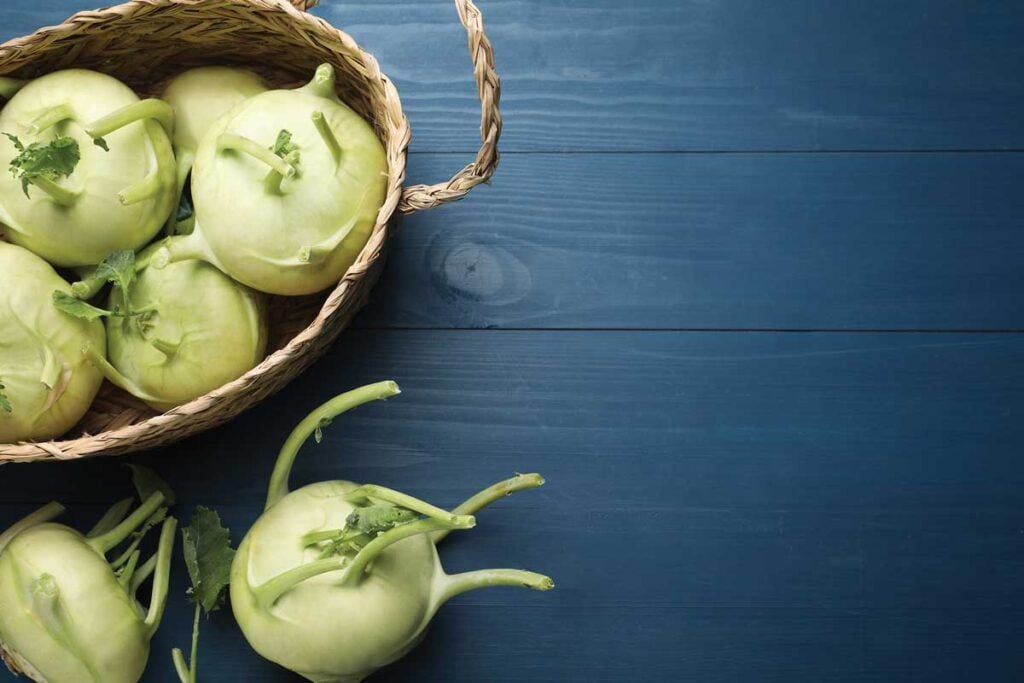
Kohlrabi is a cruciferous vegetable that consists of a bulb with stems and leaves, all of which is edible. It can be enjoyed raw or cooked. One cup of raw kohlrabi contains about 36 calories, 8 g of carbohydrates, 5 g of fiber, 32 mg of calcium, 472 mg of potassium, 84 mg of vitamin C, and 0.2 mg of vitamin B6.1
Health benefits
Kohlrabi has various health benefits due to its nutritional composition. Kohlrabi is an excellent source of vitamin C; this vitamin facilitates various essential physiologic processes, such as immune response, energy metabolism, and neurotransmission.2 Additionally, vitamin C is an antioxidant that helps protect against oxidative damage, thereby potentially reducing the risk of developing or slowing the progression of certain chronic diseases, such as cancer and cardiovascular disease.2,3 Kohlrabi, like other cruciferous vegetables, contains glucosinolates, which are sulfur-containing phytonutrients that have antioxidant and anticarcinogenic properties.4,5 Furthermore, kohlrabi is a good source of fiber, which helps maintain normal bowel movements and prevent constipation.6–8 Fiber consumption also slows the absorption of glucose, thereby stabilizing blood sugar levels after meals,6-8 and fiber intake can help protect against cardiovascular disease.6,7
Bottom Line
Kohlrabi is a nutritious, versatile vegetable to add to your diet. Sautéed, roasted, or raw, there’s no wrong way to enjoy this winter wonder!
Sources
- Kohlrabi, raw. US Department of Agriculture FoodData Central. 1 Apr 2019. Accessed 20 Jan 2026. https://fdc.nal.usda.gov/food-details/168424/nutrients
- Lykkesfeldt J, Carr AC. Vitamin C. Adv Nutr. 2024 Jan;15(1):100155.
- Vitamin C: fact sheet for health professionals. National Institutes of Health Office of Dietary Supplements. Updated 31 Jul 2025. Accessed 20 Jan 2026. https://ods.od.nih.gov/factsheets/VitaminC-HealthProfessional/
- Cruciferous vegetables. Linus Pauling Institute Oregon State University. 2005. Updated Dec 2016. Reviewed Apr 2017. Accessed 20 Jan 2026. https://lpi.oregonstate.edu/mic/food-beverages/cruciferous-vegetables
- Yi GE, Robin AH, Yang K, et al. Identification and expression analysis of glucosinolate biosynthetic genes and estimation of glucosinolate contents in edible organs of Brassica oleracea subspecies. Molecules. 2015;20(7):13089–13111.
- P NPV, Joye IJ. Dietary fibre from whole grains and their benefits on metabolic health. Nutrients. 2020;12(10):3045.
- Akbar A, Shreenath AP. High fiber diet. Updated 1 May 2023. In: StatPearls. StatPearls Publishing; 2024. Accessed 20 Jan 2026. https://www.ncbi.nlm.nih.gov/books/NBK559033/
- Mayo Clinic Staff. Dietary fiber: essential for a healthy diet. Mayo Clinic. 4 Nov 2022. Accessed 20 Jan 2026. https://www.mayoclinic.org/healthy-lifestyle/nutrition-and-healthy-eating/in-depth/fiber/art-20043983