
Nutrition Health Review

September-October 2023

[custom-post-url]

Veterans Corner: Health and Wellness Reports from Around the United States

Study links burn pit smoke exposure to increased lung particle burden in post-9/11 veterans. A recent study found a link between burn pit exposure and deployment-related distal lung diseases in post-9/11 deployed military veterans. Lung tissue samples from 24 veterans, 10 patients with respiratory bronchiolitis (a lung disorder caused by smoking), and 10 controls without lung disease were analyzed. Veterans had significantly greater anthracotic (carbon-based) pigment burden than controls and a similar level of burden to patients with respiratory bronchiolitis. Anthracotic pigment fraction was significantly associated with high exposure to burn pits. There was no significant association between pigment fraction and exposure to diesel exhaust or sandstorms. These findings suggest that exposure to burn pits might contribute to the development of deployment-related distal lung diseases in veterans. Visit https://medicalxpress.com/news/2026-01-links-pit-exposure-lung-particle.html  to read more. VA/DoD recommendations updated for primary care management of chronic kidney disease. The United States (US) Department of Veterans Affairs (VA) and US Department of Defense (DoD) released an updated 2025 clinical practice guideline for the primary care management of chronic kidney disease (CKD). The guidelines encompass 23 items in 4 categories, including diagnosis, assessment, and laboratory monitoring; general management strategies; pharmacologic management of CKD and associated conditions; and contrast-associated acute kidney injury management. These guidelines suggest screenings for individuals aged older than 60 years and individuals with diabetes, hypertension, and/or cardiovascular disease. New recommendations were added about the use of certain pharmacologic treatments, such as angiotensin-converting enzyme inhibitor/ angiotensin II receptor blocker continuation, glucagon-like peptide-1 receptor agonists, sodium-glucose cotransporter 2 inhibitors, and statins.  Visit https://www.acpjournals.org/doi/10.7326/ANNALS-25-03499 to read more. Upper gastrointestinal symptoms and Gulf War Illness in a clinical cohort of US veterans: a retrospective, cross-sectional study. In this study, researchers aimed to assess the relationship between upper gastrointestinal (UGI) symptoms and Gulf War Illness (GWI). Among 596 Gulf War veterans, 413 had GWI. In total, 557 veterans (93.5%) reported at least 1 UGI symptom, and 322 (54.1%) reported 2 to 3 symptoms. The most common symptoms were stomach pain (88.8%), nausea or vomiting (80.4%), and poor appetite (41.6%). Significantly more patients with GWI reported at least 1 UGI symptom compared to veterans without GWI (98.3% vs 82.5%). Mean number of UGI symptoms was significantly higher among veterans with GWI (3.1) compared to veterans without GWI (2.1). GWI was significantly associated with the presence of any UGI symptom; additionally, there were significant associations between GWI and presence of specific symptoms, including nausea and vomiting, poor appetite, history of ulcer/reflux, stomach pain, and dysphagia (difficulty swallowing). This study highlights that Gulf War veterans frequently experience UGI symptoms and shows an association between GWI and UGI symptoms.  Visit https://pmc.ncbi.nlm.nih.gov/articles/PMC12414160/ to read more.   
Read More »

Health Benefits of Kohlrabi

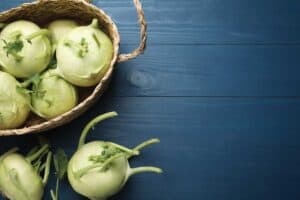
Kohlrabi is a cruciferous vegetable that consists of a bulb with stems and leaves, all of which is edible. It can be enjoyed raw or cooked. One cup of raw kohlrabi contains about 36 calories, 8 g of carbohydrates, 5 g of fiber, 32 mg of calcium, 472 mg of potassium, 84 mg of vitamin C, and 0.2 mg of vitamin B6.1 Health benefits Kohlrabi has various health benefits due to its nutritional composition. Kohlrabi is an excellent source of vitamin C; this vitamin facilitates various essential physiologic processes, such as immune response, energy metabolism, and neurotransmission.2 Additionally, vitamin C is an antioxidant that helps protect against oxidative damage, thereby potentially reducing the risk of developing or slowing the progression of certain chronic diseases, such as cancer and cardiovascular disease.2,3 Kohlrabi, like other cruciferous vegetables, contains glucosinolates, which are sulfur-containing phytonutrients that have antioxidant and anticarcinogenic properties.4,5 Furthermore, kohlrabi is a good source of fiber, which helps maintain normal bowel movements and prevent constipation.6–8 Fiber consumption also slows the absorption of glucose, thereby stabilizing blood sugar levels after meals,6-8 and fiber intake can help protect against cardiovascular disease.6,7  Bottom Line Kohlrabi is a nutritious, versatile vegetable to add to your diet. Sautéed, roasted, or raw, there’s no wrong way to enjoy this winter wonder! Sources Kohlrabi, raw. US Department of Agriculture FoodData Central. 1 Apr 2019. Accessed 20 Jan 2026. https://fdc.nal.usda.gov/food-details/168424/nutrients Lykkesfeldt J, Carr AC. Vitamin C. Adv Nutr. 2024 Jan;15(1):100155.  Vitamin C: fact sheet for health professionals. National Institutes of Health Office of Dietary Supplements. Updated 31 Jul 2025. Accessed 20 Jan 2026. https://ods.od.nih.gov/factsheets/VitaminC-HealthProfessional/  Cruciferous vegetables. Linus Pauling Institute Oregon State University. 2005. Updated Dec 2016. Reviewed Apr 2017. Accessed 20 Jan 2026. https://lpi.oregonstate.edu/mic/food-beverages/cruciferous-vegetables Yi GE, Robin AH, Yang K, et al. Identification and expression analysis of glucosinolate biosynthetic genes and estimation of glucosinolate contents in edible organs of Brassica oleracea subspecies. Molecules. 2015;20(7):13089–13111.  P NPV, Joye IJ. Dietary fibre from whole grains and their benefits on metabolic health. Nutrients. 2020;12(10):3045.  Akbar A, Shreenath AP. High fiber diet. Updated 1 May 2023. In: StatPearls. StatPearls Publishing; 2024. Accessed 20 Jan 2026. https://www.ncbi.nlm.nih.gov/books/NBK559033/ Mayo Clinic Staff. Dietary fiber: essential for a healthy diet. Mayo Clinic. 4 Nov 2022. Accessed 20 Jan 2026. https://www.mayoclinic.org/healthy-lifestyle/nutrition-and-healthy-eating/in-depth/fiber/art-20043983  

Read More »

Norovirus: What You Need to Know

Introduction More than just the typical respiratory viruses are circulating this season. Each year between November and December, norovirus, also called the stomach flu, surges in the United States (US).1–5 At the end of December 2025, the US Centers for Disease Control and Prevention (CDC) reported a national positivity rate of 14.1%.6 Although this wave of the winter vomiting bug is not unexpected, especially after last year’s record-breaking season, this trend has health experts worried. This wave arrived weeks ahead of the CDC’s predictions, and a new ultra-contagious strain, subvariant GII.17, has entered the scene.1,7,8 As the usual bouts of seasonal illness continue to swirl this winter, here’s what you need to know to protect yourself from norovirus.  What Is Norovirus? Norovirus is a group of viruses belonging to the Caliciviridae family.9–11 When the virus enters the body, the stomach and intestines swell and become inflamed, a condition called gastroenteritis. This leads to the trademark symptoms of norovirus, severe vomiting and diarrhea.6,9–13 This illness is fairly common; about 1 in every 15 people in the US is infected annually, and the CDC records roughly 2,500 norovirus outbreaks each year. It is also the leading cause of foodborne illness, responsible for nearly 58% of cases in the US.2,12–14 Norovirus is highly contagious. Anyone, at any age, is susceptible to contracting the virus, which spreads through close contact or via contaminated food or surfaces.6,9–12 People infected with it shed billions of tiny virus particles in their feces and vomit that can make others sick. It only takes a few particles to make someone else ill, and these germs can linger on surfaces for several days or weeks. People can also be contagious for up to 2 weeks after symptoms disappear.12,15  All of these factors make certain settings and populations more susceptible to norovirus. People living or working in semi-enclosed or enclosed spaces, such as schools, long-term care facilities, prisons, and college dormitories, are more likely to contract the virus. The same is true for those on cruise ships.4 This is also what makes certain age groups more vulnerable.6 Children between 6 and 18 months are a high-risk group because they spend time in daycare, a close-quarters setting that poses hygiene challenges and involves sharing items, such as toys. Seniors, especially those living in assisted living spaces or nursing homes, face similar challenges.16 People who are immunocompromised are another vulnerable group. Signs, Symptoms, and Treatment Once a person comes into contact with norovirus, it takes 12 to 48 hours to start exhibiting symptoms, the onset of which are usually sudden and harsh.11 The most common symptoms are diarrhea, vomiting, nausea, and stomach pain, but some people might also develop a fever, headache, and body aches.4,9,12,13,16 Diagnosis is often based on the presence of these symptoms. Testing usually isn’t necessary, but a provider may test a stool sample to confirm the diagnosis. There is no medicine or targeted therapy for norovirus; antibiotics are not effective against viral infections. Treatment focuses on symptom management while letting the illness run its course.3,4,9,12,17 Most people will recover on their own within 3 days. The symptoms of norovirus often introduce a more subtle risk: dehydration. This can turn a short-term bout of illness into a medical emergency, especially in young children and the elderly. Although deaths are rare, norovirus kills about 900 Americans every year, and these populations are particularly vulnerable.11,12 The condition has also led to more than 100,000 hospitalizations and 465,000 emergency department visits annually.12 Even though the thought of eating or drinking can be nauseating, experts suggest sipping water, an oral hydration solution, or electrolyte drinks throughout the day to prevent dehydration and stave off emergency visits and care.12 Prevention Norovirus is a highly contagious and resilient virus, but there are a few prevention strategies that can mitigate its spread. Whether you’re sick or you’ve been exposed to the infection, consider the following advice. Wash your hands. Thoroughly wash your hands with soap and warm water for at least 20 seconds, especially after using the bathroom or coming into contact with contaminated surfaces. Unlike many other illnesses, hand sanitizer is not 100% effective against norovirus.6,11,18 A combination of both works best. Disinfect surfaces. Norovirus is also resistant to most disinfectants. The US Environmental Protection Agency has a list of disinfectants effective against norovirus, but you can create your own cleaner at home.19 The CDC recommends creating a chlorine bleach solution using 5 to 25 tablespoons of household bleach (5–8%) per gallon of water, leaving it on the affected surface for at least 5 minutes, and cleaning the entire area again with soap and hot water.19 Clean up carefully. Using disposable gloves, clean up vomit and stool with disposable towels. Then seal them in a plastic bag and dispose of them in the trash. Even on soft surfaces, like carpets, linens, and fabrics, norovirus can be viable for a few days to a week.20 Launder any soiled items with detergent and hot water at the maximum available cycle length and machine dry them at the highest heat setting.17,18 Handle and prepare food safely. Most reported norovirus outbreaks are caused by people who are sick and touch or prepare food. If you are exposed to norovirus or become ill, avoid cooking areas and do not prepare, handle, or serve food. Infected people should abstain from these activities and spaces for at least 48 hours after their symptoms stop.21 In addition to proper handwashing, all people should carefully wash fruit and vegetables before cooking or eating them. Noroviruses are relatively heat-resistant and can survive temperatures up to 145 °F.12,15,18,22 This is one of the reasons why filter-feeding shellfish like oysters, which are often eaten raw, are one of the foods most commonly involved in norovirus outbreaks.12,21,22 Stay home and isolate. One of the most effective strategies for staving off norovirus is the standard public health prevention advice: staying home when sick. People who have been exposed to norovirus should stay home for at least 48 hours, the

Read More »

What is a Boxed Warning?

By Sarabeth Lowe, MPH Ms. Lowe is a Communication Specialist at the University of Delaware Disaster Research Center. Welcome to the fifth edition of Health Literacy Highlights, a column that explores topics related to finding, understanding, and utilizing health information. In this issue, I will discuss boxed warnings, the highest safety warning the United States (US) Food and Drug Administration (FDA) can assign to prescription medications. In November 2025, the US Department of Health and Human Services made a shocking announcement: the FDA decided to remove the boxed warning from hormone replacement therapy (HRT), used to treat menopausal symptoms.1–3 These warnings, formerly known as “black box” warnings, are the FDA’s highest and most stringent safety warnings for prescription drugs that alert clinicians and consumers to serious, harmful, and potentially life-threatening adverse reactions.4–6 These communications might sound scary, but they are a crucial tool for public health messaging and conveying medications’ risks.7,8 Here’s what you need to know about boxed warnings. What Boxed Warnings Are—And Are Not A boxed warning is the written, printed, or visual material on a medication’s packaging that alerts prescribers, pharmacists, and consumers to major, life-threatening, or permanently disabling risks associated with the drug’s use.5 Since 1979, the FDA has required pharmaceutical companies to assign these labels to prescription drugs that may pose these risks in the event of an adverse reaction.4,5,7,9,10 These labels take their names from the prominent, bold, black-bordered box surrounding the warning content, which is organized in bullet points with a header written in bold uppercase letters.11,12 These notices appear at the top of a drug’s label or inside its informational package insert. They are also attached to bulk containers of drugs so that pharmacists have the most up-to-date official information available.10  In addition to being posted and maintained on the FDA and drug manufacturers’ websites, boxed warnings are recorded in the Prescriber’s Digital Reference, an annually updated online drug information resource containing FDA-approved prescribing details for prescription drugs.7,13,14 Boxed warnings include important information for healthcare professionals and consumers, including:5,12,14 Severe adverse effects. These side effects are risks that could result in severe harm, hospitalization, or death, such as severe asthma attacks, stroke, addiction, and suicidal thoughts. Cautions for consumers. Boxed warnings may advise consumers to avoid certain activities, such as driving or operating large machinery, while using the drug. Medication guidelines. This information includes when to take the medication, foods or drinks to avoid, dosage, and potential harmful drug interactions. Notably, boxed warnings indicate that there is reasonable evidence of a significant safety risk or serious hazard when taking the medicine; a definitive causal relationship between the drug and its potential risk(s) does not need be proven.10,14 Boxed warnings are not intended to prevent doctors from prescribing these drugs or to dissuade patients from taking them. They are designed to raise awareness of a medication’s potential serious adverse effects so that providers can discuss potential harms with their patients and effectively weigh the risks and benefits.5,9 Safety and Approval Process—Assessing Risks Healthcare providers are expected to exercise clinical judgment when deciding whether to prescribe medications with boxed warnings.4 However, the safety of these medications has been effectively and thoroughly studied by the time they reach this point. All medications must pass the FDA’s rigorous approval process, which can take years depending on the kind of drug, before hitting the market.15,16 Why, then, are boxed warnings issued after this approval process? Issuing these warnings is a complex, evidence-based process that requires postmarketing surveillance and ongoing drug safety monitoring. Boxed warnings are added only when substantial clinical data show the drug can cause severe harm, hospitalization, or death, and researchers and clinicians usually don’t discover all of medicine’s adverse effects until it “can be used in larger, broader populations for longer durations” and “prescribed for unapproved or off-label purposes.”10  The FDA’s MedWatch program is designed to gather this kind of data. This online platform allows clinicians, hospitals, and patients to report adverse events associated with certain drugs or medical products.10,17 The FDA tracks and evaluates these reports, looking to find any concerning patterns.14,16–18 Potential safety issues can also be identified through clinical trial data. Based on its findings from these and other epidemiological data sources, the FDA can begin the process of issuing a boxed warning to a medication label. This evaluation process is what makes these notices living documents. Boxed warnings can also be rescinded, a change that requires new, robust scientific evidence showing that the risks are overstated or don’t apply to current patient populations.5 There are several reasons boxed warnings can be removed:5 Outdated or flawed original studies. Upon review, the FDA might decide that the original study that led to the boxed warning had design flaws, differences in patient demographics, or older drug formulations that no longer reflect current use. Evolving science. With innovative technologies and approaches, subsequent, better-designed research can lead to new data, evidence, and findings. This can create a clearer, broader picture of a medication’s potential adverse reactions, sometimes showing that benefits outweigh risks for certain groups when used as prescribed. Distorted risk perception. Boxed warnings list the most serious potential harms, even if those adverse effects are incredibly rare. This can scare eligible patients, leading to fear and misinformation, and prevent them from accessing necessary, targeted treatments. Expert review and advocacy. Calls to action from expert panels, medical organizations, and advocacy groups have led the FDA to reconsider and remove boxed warnings. What Drugs Have Boxed Warnings? According to a 2022 study, more than 400 medications currently carry boxed warnings.10 These warnings typically apply to entire classes of medications instead of a single drug. This is because medications in the same class share similar chemical structures, therapeutic uses, and mechanisms of action (ie, how the drug causes specific biochemical changes in the body).4,9,19,20  Examples of medications with boxed warnings include: Antidepressants. While selective serotonin reuptake inhibitors can lessen the severity of depression symptoms, research shows that patients, particularly children and young adults, have an increased

Read More »

Cottage Cheese: A Timeless Staple

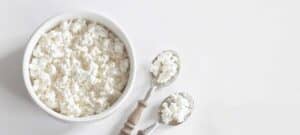
By Sarabeth Lowe, MPH Ms. Lowe is a Communication Specialist at the University of Delaware Disaster Research Center. Ice cream. Pancakes. Tofu. Biscuits. Whether it’s scooped straight from the tub or spread across snack foods, cottage cheese is making a comeback.1–3 This dairy delicacy saw nearly 50 years of steady decline after peaking in popularity in the 1970s.1,4 In March 2025, however, Google searches for “cottage cheese” reached the highest levels since 2004.5 There are several reasons it has returned to the American diet—and TikTok—with such a vengeance. Here’s what you should know. How it’s made Similar to mozzarella and ricotta, cottage cheese is a curdled milk product. Making it is a relatively simple process, one that you can even carry out at home, that requires only a few ingredients and careful handling. It’s not an ultra-processed food. In fact, the term “cottage cheese” reflects its humble, pastoral origins; the cheese was generally made in cottage-type houses from leftover milk.1,6 Preparation begins by adding an acid, such as vinegar, to pasteurized milk. This separates the milk solids from the whey, forming a curd. This semisolid byproduct is removed at just the right moment and cut into small pieces, which are then cooked, washed, and pressed gently to absorb any remaining whey.1,4,5,7,8 These curds are rinsed, and other additives, such as cream and salt, are mixed in. All of these steps and ingredients give cottage cheese its tangy, mild flavor and unique, albeit lumpy, texture. Nutrition profile Though decades of research have shown that cottage cheese is a nutritious food, there is not a wealth of high-quality data from randomized controlled trials that definitively point toward specific health benefits.6 However, its excellent nutrient profile is well established, supporting its place in a healthy diet.2,7,9–13 It’s worth noting that cottage cheese is available in three types—nonfat, low-fat, or whole-fat—and that the type of milk and any added ingredients affect its nutritional content.12 Compared with other dairy products, cottage cheese is a relatively healthy option.13,14 A half-cup serving of full-fat cottage cheese contains around 100 calories, whereas an equal serving of ricotta cheese contains about 190 calories, and a three-quarter-cup serving of full-fat Greek yogurt has roughly 160 calories.2,14 A same-sized serving of 2% fat cottage cheese typically has less saturated fat and 5 times more potassium than hard cheeses.12,14 It is also an important source of selenium, riboflavin, magnesium, and phosphorus.1,2,7,11–15 Notably, cottage cheese is lower in calcium compared to other dairy products, and, unlike milk, is not generally fortified with vitamins A and D.1,11,15 At a glance: cottage cheese nutrition facts. The following information is provided by the United States Department of Agriculture for a 100-g (about 3.5 oz or just under a half cup) serving of low-fat (2% milkfat) cottage cheese.10,14 Calories: 84 Fat: 2.3 g Sodium: 321mg Carbohydrates: 4.3 g Fiber: 0 g Sugars: 4.1 g Protein: 11 g Calcium: 111 mg Cottage cheese’s high protein content is perhaps one of its best selling points.1 In addition to providing a high amount of this essential macronutrient, cottage cheese is rich in casein.7,11,12,15–19 Casein is a complete protein, meaning that it contains all of the essential amino acids your body needs.12,20 It is also a slow-digesting protein, which can promote feelings of fullness and prevent spikes in blood sugar.21  Choices and Considerations As with all foods, moderation is important. Cottage cheese tends to be high in sodium, which can increase blood pressure and, thus, your risk for heart attack and stroke.2,11,18–20,22 This is an especially important consideration because Americans, on average, already overconsume salt.17,22–24 The same applies to the fat content across different varieties. Though cottage cheese is relatively low in saturated fat, it still contributes to your overall intake. A diet rich in those kinds of food can raise your blood levels of low-density lipoprotein (“bad”) cholesterol, also increasing the likelihood of the same cardiovascular risks.2,13 Fortunately, grocery stores often carry multiple varieties of cottage cheese that range in their nutrient profiles and flavors. Here are some factors to consider when choosing the kind that best meets your needs and preferences. Nutritional tradeoffs. Cottage cheese comes in three fat levels: fat-free (0%), low-fat (1%), reduced-fat (2%), and whole milk (4%). While low-fat options have fewer calories and more protein, some research shows that full-fat cottage cheese increases satiety.25 With moderation, any variety can fit into a healthy diet. Sodium content. Because salt is a main ingredient in cottage cheese, even a small portion can significantly contribute to your overall sodium intake. Consider buying a low- or reduced-sodium option, ideally one that has 300 mg or less per serving.2,10,14,25–27 Probiotics. While many cottage cheeses are fermented, not all varieties contain probiotics, the live microorganisms that can improve gut health.25,27–30 If you are interested in this health benefit, look for labels that say “live” or “active cultures.” Extra ingredients. For better or worse, some cottage cheeses contain extra ingredients. These can include ones that create a specific flavor profile, such as honey, herbs, and fruit, or additives that make the dish more appealing, such as artificial sweeteners, gums, and thickening agents. Many high-quality cottage cheese brands are made without these additional ingredients, and nutrition experts generally recommend prioritizing whole, unprocessed foods whenever possible.2,14,25–27 Lactose. During preparation, much of the whey is drained from cottage cheese, resulting in naturally lower lactose levels.10,31 Some people who are lactose intolerant can eat cottage cheese with few symptoms. If you are sensitive to lactose, look for containers labeled as “lactose-free.” Texture. There is no nutritional difference between large-curd and small-curd cottage cheese; the difference in size is simply a result of how each type is made.11,14,26 However, large-curd cottage cheese tends to be higher in moisture, so it may be perceived as tasting creamier and sweeter than the latter. Small-curd varieties tend to taste slightly tangier and more acidic.14,26 There is no one-size-fits-all approach to choosing the type of cottage cheese that’s best for you, but experts suggest selecting a variety that is minimally

Read More »
Veterans Background Image

Veterans Corner: Health and Wellness Reports from Around the United States

Low-glutamate diet linked to brain changes and migraine relief in veterans with Gulf War Illness. A recent study suggests that following a low-glutamate diet could reduce headaches and migraines among veterans with Gulf War Illness. Compared to healthy controls, veterans with Gulf War Illness had greater cortical thickness and were more likely to experience migraines. After following a low-glutamate diet, cortical thickness significantly decreased among veterans. Reports of migraines among veterans dropped from over 50 percent to less than 20 percent after one month of adhering to the low-glutamate diet. Fatigue, pain, and cognitive dysfunction also improved with a low-glutamate diet. Glutamate is an excitatory neurotransmitter involved in pain mediation. It is commonly found in processed foods, and it occurs naturally in some foods, such as tomatoes and mushrooms. Visit https://medicalxpress.com/news/2025-11-glutamate-diet-linked-brain-migraine.html to read more. Rehabilitation outcomes of service members and veterans with mild-to-moderate traumatic brain injury. In this study, researchers assessed the impact of the Intensive Evaluation and Treatment Program (IETP), an inpatient rehabilitation program, on mild-to-moderate traumatic brain injury (TBI) symptoms among service members and veterans. In total, 127 participants were included for analysis. Mean inpatient stay was 41.5 days. Participants had an average of 7.45 deployments and 16.32 concussion events, most of which were reported to be blast-related. Total Neurobehavioral Symptom Inventory (NSI) and PTSD Checklist for DSM-5 (PCL-5) scores significantly improved from baseline to discharge, and remained improved at six-month follow-up. Patient Reported Outcomes Measurement Information System for Pain Interference (PROMIS-PI) results showed that in pain interference was significantly reduced at discharge and six-month follow-up compared to baseline. Mayo-Portland Adaptability Inventory (M2PI) scores significantly improved from baseline to discharge, but these improvements were not maintained at six-month follow-up. These findings indicate that the IETP was effective in improving symptoms of mild-to-moderate TBI among service members and veterans.  Visit https://pmc.ncbi.nlm.nih.gov/articles/PMC12604533/ to read more. LDL cholesterol improved among veterans in program with health coaches, other resources. A recent study found that participation in the Veterans Affairs Lipid Optimization Reimagined Quality Improvement (VALOR-QI) program led to improvements in low-density lipoprotein (LDL) cholesterol levels among veterans with atherosclerotic cardiovascular disease (ASCVD). The VALOR-QI program aimed to address barriers to optimal cholesterol management among participants. This analysis, which included data from 83,232 veterans, found that the number of veterans who achieved LDL cholesterol levels lower than 70mg/dL increased by 32 percent during the program. Among veterans who participated for two years, 33.5 percent met their LDL cholesterol goals. Thirty-six percent of veterans aged 75 years or older achieved LDL cholesterol levels below 70mg/dL. At baseline, 78 percent of veterans had a prescription for cholesterol-lowering medication, which increased to 88 percent during the program, and patient adherence to medication rose from 65 to 77 percent.  Visit https://newsroom.heart.org/news/ldl-cholesterol-improved-among-veterans-in-program-with-health-coaches-other-resources to read more..

Read More »

Latest Recipes

Sign up for NHR’s E-Newsletter!

Get free recipes, tips on healthy living, and the latest health news

Email(Required)

Subscribe to NHR Print for only $18 a year!

Get unlimited access to content plus receive 6 eye-appealing, information-packed print issues of NHR delivered to your mailbox.

Superfood Spotlight

Know Your Nutrient

Mushroom Asset